

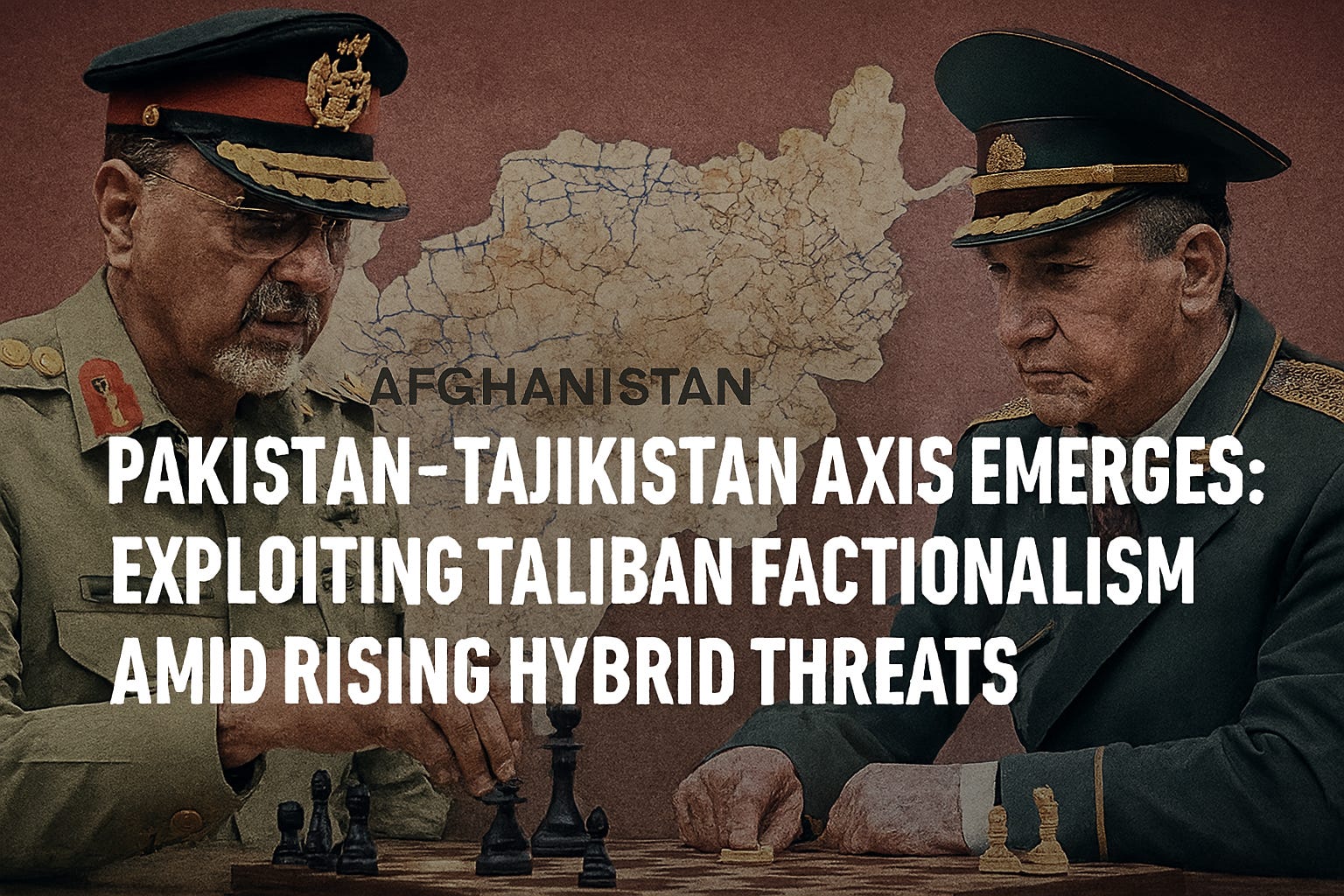
Pakistan–Tajikistan Axis Emerges: Exploiting Taliban Factionalism Amid Rising Hybrid Threats
How Pakistan and Tajikistan Are Shaping Afghanistan’s Future

Disclaimer: This document is prepared for analytical purposes only. It is based on confidential sources, open-source information, and professional assessment. While care has been taken to ensure accuracy, the content reflects judgments at the time of writing and may change as new information emerges. It does not represent operational guidance. Redistribution or use outside its intended context is not permitted without prior consent.Summary
Pakistan’s Chief of Army Staff, Field Marshal Hafiz Syed Asim Munir Ahmed Shah, has expressed openness to supporting anti-Taliban armed fronts and even ISIS elements as leverage in the internal rivalry within the Afghan Taliban. This rivalry involves senior Taliban leaders — Mullah Mohammad Yaqoob Mujahid, Sirajuddin Haqqani, and Mullah Abdul Ghani Baradar — against opposing factions. On November 13, Tajikistan’s Defense Minister met with Pakistan’s COAS in Islamabad to discuss regional security and military cooperation, with a focus on curbing Taliban unilateral actions. Rumors about Tajikistan expelling the National Resistance Front (NRF) from Dushanbe remain unconfirmed.
Warning to Policymakers
The emerging strategic alignment between Pakistan and Tajikistan reflects a pragmatic response to Taliban factionalism and rising hybrid threats in the region. Pakistan’s openness to supporting anti-Taliban fronts and ISIS-linked actors, coupled with Tajikistan’s dual-track approach of diplomacy and covert resistance support, signals a recalibration of regional security posture.
This evolving axis may play a pivotal role in shaping Afghanistan’s internal dynamics and mitigating cross-border jihadist threats. Policymakers should closely monitor these developments, as they carry implications for NATO’s eastern flank, Central Asian stability, and broader multipolar competition.